Synthetic Fraud: Deepfakes and Brand Voice Theft in 2026
Executive Summary
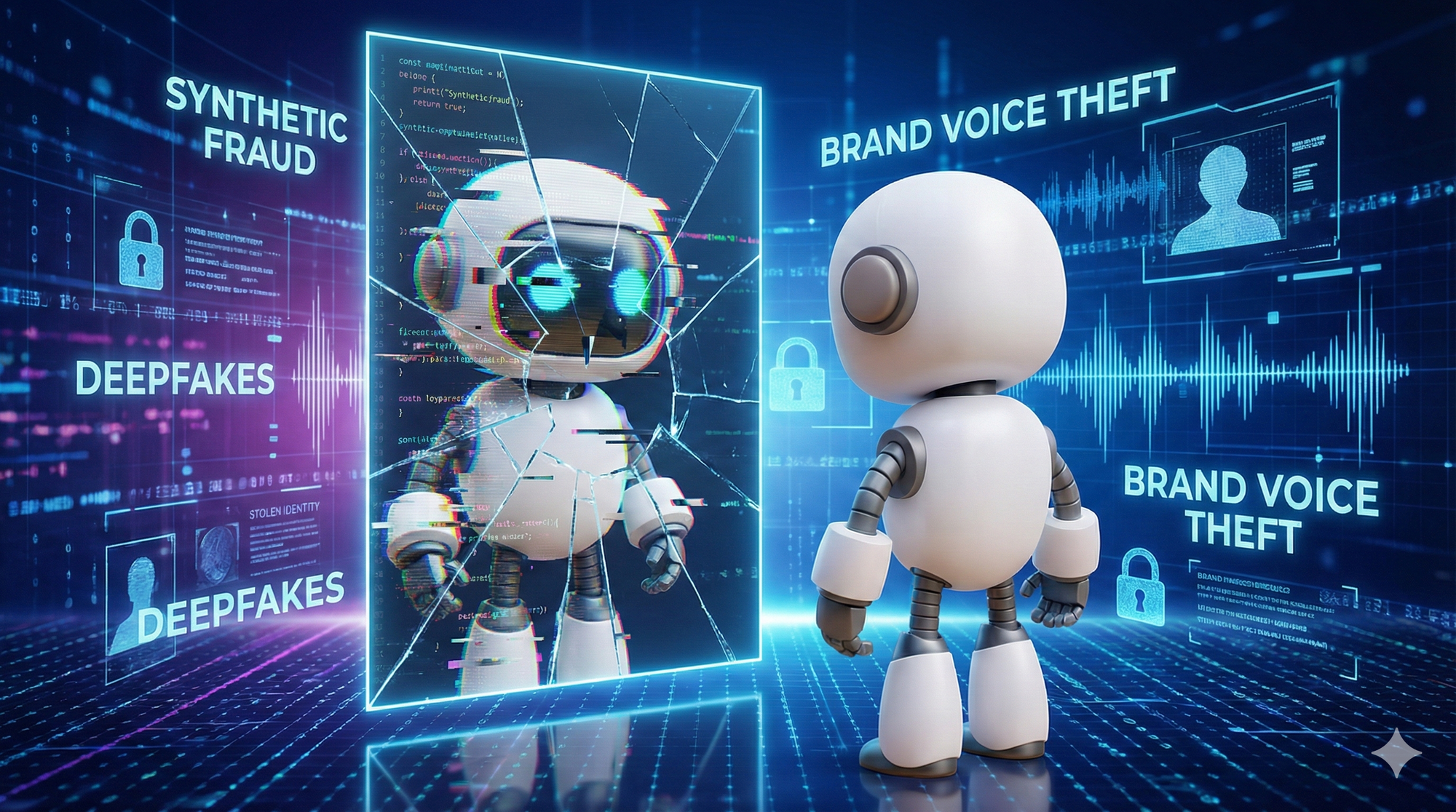
In 2026, the perimeter of brand protection has shifted from physical assets to digital identities. Synthetic Fraud—the use of AI-generated deepfakes and voice cloning—has emerged as a primary threat to global brand integrity. This post explores how "Identity Hijacking" targets C-suite executives and brand ambassadors to execute financial fraud and reputation sabotage. To counter this, organizations must move beyond traditional monitoring and adopt "Integrity-by-Design" through liveness detection, digital watermarking, and zero-trust communication protocols.
As we continue our 2026 Brand Risk Analysis series, we must address the most sophisticated weapon in the modern fraudster’s arsenal: Synthetic Identity Theft. We are no longer just fighting counterfeit logos or look-alike websites; we are fighting hyper-realistic simulations of human trust.
The Illusion of Authority: Brand Voice Theft
By 2026, real-time voice cloning has rendered traditional voice-based verification obsolete. Using as little as 30 seconds of high-quality audio from a public keynote or earnings call, malicious actors can generate a "Voice Twin" capable of holding dynamic, emotionally nuanced conversations.
- The Vishing Evolution: We are seeing a surge in "Executive Impersonation" attacks. Finance teams receive video calls from what appears to be their CEO, requesting urgent, "off-ledger" transfers for sensitive acquisitions. The voice, the cadence, and even the background noise of the "home office" are perfectly replicated.
Deepfake Advertising and Reputation Sabotage
The threat extends beyond internal fraud to public perception. In the current market, "Brand Sabotage" is a service sold on the dark web. Competitors or hacktivists deploy hyper-realistic videos of brand ambassadors making controversial statements or products failing in dangerous ways.
The danger lies in the "Viral Velocity." Before an AI-detection algorithm can flag the content, it has often reached millions of viewers, causing immediate fluctuations in stock price and consumer sentiment.
Key Insight: In 2026, a brand’s reputation is only as strong as its ability to prove that its words actually belong to its people.
Building the "Integrity Shield"
To align with Step 3 of our 5-Step Framework (Technological Integration), brands must implement the following defenses:
- Liveness Detection & Biometric Anchoring: Implement mandatory multi-factor authentication that requires physical "liveness" tests (e.g., specific eye movements or randomized phrase repetition) for any high-stakes internal communication.
- Digital Watermarking (AI Provenance): Every official video or audio clip released by your brand should contain a cryptographic "fragile watermark." This invisible signature breaks if the content is tampered with, allowing platforms to instantly verify authenticity.
- The Zero-Trust Communication Protocol: Move away from "See and Believe." Train employees to verify high-pressure requests through a secondary, out-of-band encrypted channel, regardless of how "real" the caller looks or sounds.
Conclusion
As we navigate the rest of January's roadmap, the lesson is clear: Trust is no longer a given; it is a verified asset. Defensive agility is the only way to stay ahead of synthetic threats.
References
- Global Risk Report 2026: The Rise of Synthetic Social Engineering.
- Cybersecurity & Infrastructure Security Agency (CISA): Updated Guidelines for Mitigating Deepfake Threats in Corporate Environments (v4.2).
- Journal of Digital Integrity: Watermarking and the Future of Media Provenance (Q1 2026 Issue).
- Brand Protection Council: Annual Survey on Consumer Trust and AI Transparency.