Strategic Deep Dive: The Human Element—Training Your Team for a Post-Truth Era
Executive Summary
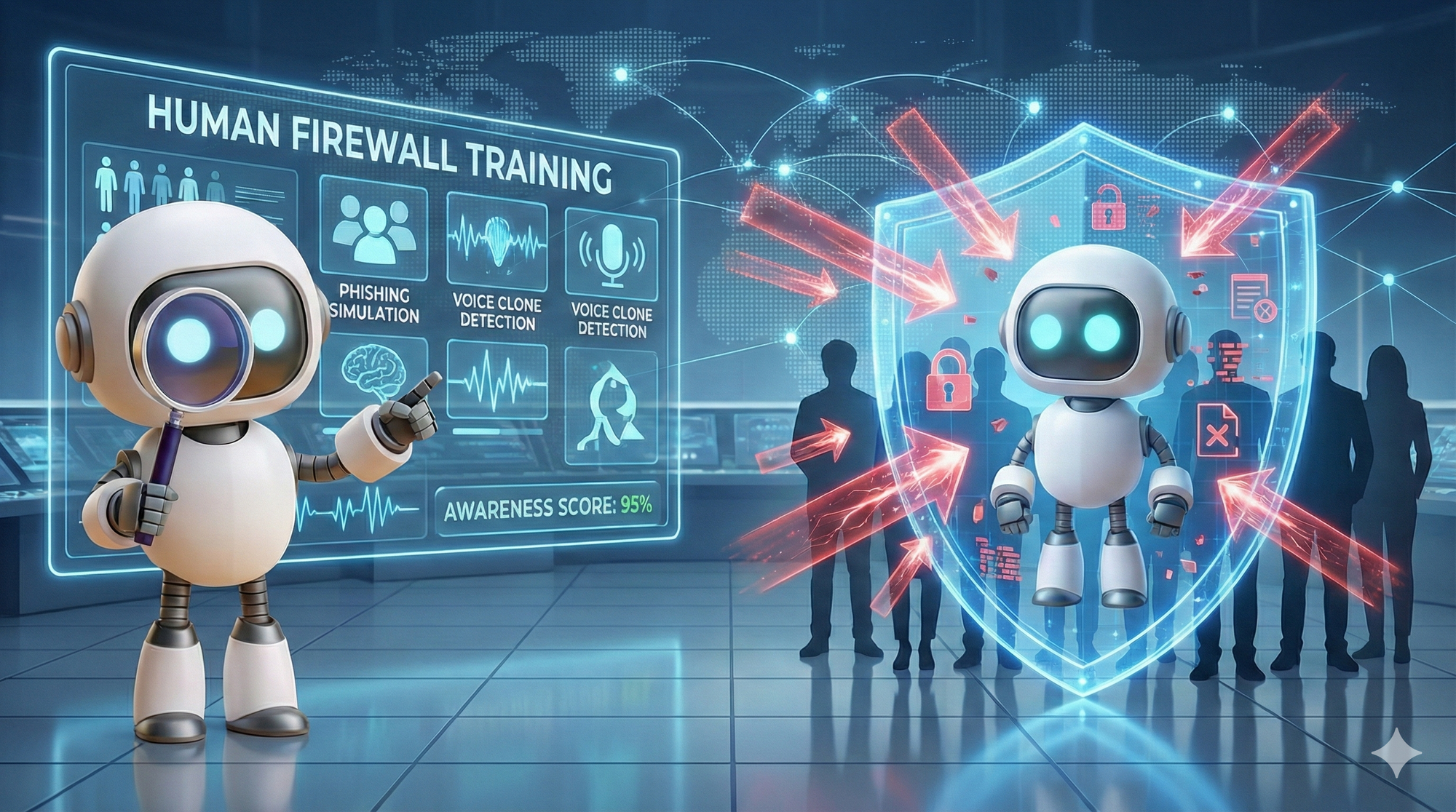
As we conclude the operational steps of our 2026 Brand Risk Analysis, we must address the "Internal Firewall": your people. In a post-truth era defined by hyper-realistic synthetic threats, even the most advanced AI defenses can be bypassed if the human element remains vulnerable. This deep dive explores how to transition from traditional compliance training to "adversarial awareness," ensuring that every employee—from the front desk to the C-suite—is equipped to verify, validate, and defend the brand’s digital integrity in real-time.
The 2026 Reality: Social Engineering 2.0
By January 2026, social engineering will have evolved beyond the crude phishing emails of the past decade. Threat actors now utilize "Synthetic Personas" to build rapport with employees over months before launching an attack. These attacks target the human tendency to trust visual and auditory cues that AI can now replicate with 99% accuracy.
- The Emotional Hook: Scammers use AI to analyze public social media profiles of employees to create high-pressure, emotionally resonant scenarios.
- Voice Hijacking: Training must now include drills on identifying "latency gaps" and unnatural cadences in cloned voices during unauthorized internal requests.
Building the "Internal Firewall"
Relying solely on automated detection is a critical mistake; your team must become an active sensor in the brand protection network.
- Zero-Trust Communication Protocols: Employees must be trained to treat every "urgent" video or voice request as unverified until a secondary, out-of-band check is performed.
- Deepfake Literacy Workshops: Teams should participate in regular sessions where they are challenged to distinguish between official brand content and high-quality synthetic spoofs.
- The "Integrity First" Culture: Shift the internal narrative from "avoiding mistakes" to "defending brand equity." When employees understand the financial impact of trust, they are more likely to follow rigorous verification steps.
C-Suite Accountability and Preparedness
The most frequent targets of synthetic fraud in 2026 are high-level executives whose voices and faces are widely available in the public domain.
- Executive Simulation Drills: Leadership teams should undergo simulated "Crisis Week" scenarios where they must respond to fake earnings calls and hijacked social media announcements.
- Personal Security Hygiene: Encouraging executives to limit the public availability of high-fidelity biometric data (audio/video) to reduce the raw material available for cloning.
Strategic Key Insight
"Technology builds the walls, but humans guard the gates. In 2026, a brand’s greatest vulnerability is not its software—it is the unverified trust of its people".
Conclusion
As we move toward the final review of our 5-Step Framework, remember that a "Resilient Brand" (Step 5) is only possible when the human element is integrated into the technological shield. Digital integrity starts with a team that knows how to question what they see and hear.
References
- Global Risk Report 2026: The Rise of Synthetic Social Engineering.
- Cybersecurity & Infrastructure Security Agency (CISA): Updated Guidelines for Mitigating Deepfake Threats in Corporate Environments (v4.2).
- Journal of Digital Integrity: Watermarking and the Future of Media Provenance (Q1 2026 Issue).
- Brand Protection Council: Annual Survey on Consumer Trust and AI Transparency.