One Character, Big Damage: The Economic Impact of Lookalike Domain Fraud
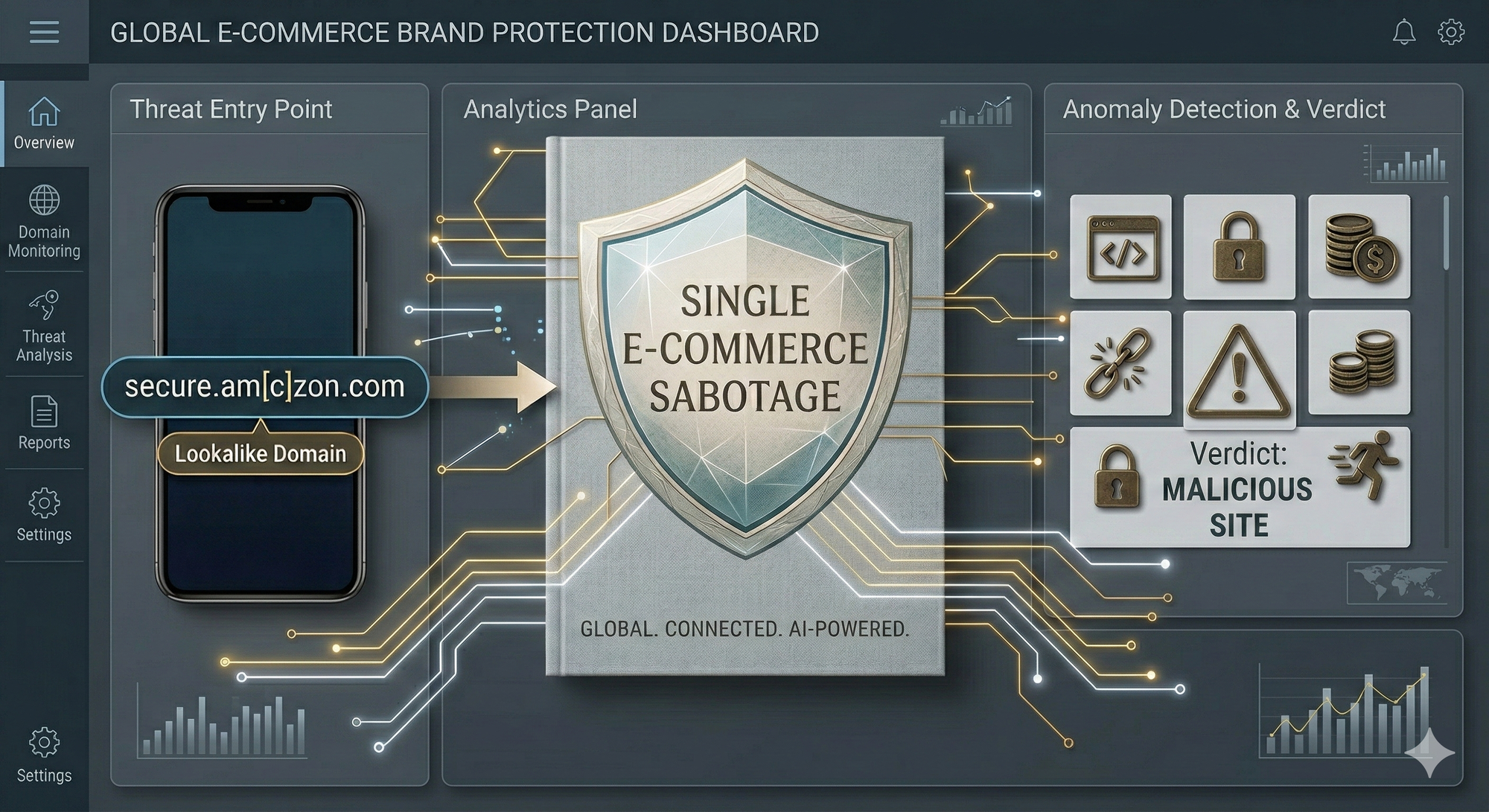
Executive Summary: By February 2026, the financial architecture of global e-commerce is under relentless siege from what analysts now term "Single Character Sabotage." Lookalike domain fraud has evolved from a technical nuisance into a mature, multi-billion dollar illicit industry that capitalizes heavily on human cognitive bias and mobile interface limitations. This research analysis explores the direct and dangerous correlation between domain-based deception and the rapid erosion of brand equity. We demonstrate why advanced tools, such as an integrated "scanner for fake products" and domains, have shifted from optional security add-ons to essential financial defense infrastructure for any globally recognized enterprise.
--
The Maturity of the Deception Economy In the mid-2020s, we witnessed a fundamental shift in how counterfeit syndicates operate. They moved away from solely relying on third-party marketplaces and began building their own sophisticated infrastructure. At the core of this strategy is Lookalike Domain Fraud: the practice of registering URLs that are visually similar to a legitimate brand's domain to deceive consumers.
In 2026, these aren't just misspelled URLs like "gogle.com". They involve complex "homograph attacks" using characters from Cyrillic, Greek, or other alphabets that render identically to Latin characters on standard screens. Furthermore, modern mobile browser interfaces often truncate full URLs to save screen space, playing directly into the hands of fraudsters. A consumer sees a familiar padlock icon and the correct brand name at the start of the URL, never realizing the domain extension is malicious. These fraudulent domains serve as the foundation for vast criminal ecosystems. They are used to launch targeted phishing campaigns, harvest high-value consumer credentials, deploy banking trojans, and, most visibly, host high-fidelity storefronts selling non-existent or "superfake" counterfeit goods.
The Financial Bleed: Direct Losses and CAC Wastage The economic impact is no longer just about siphoning off a percentage of sales; it's about siphoning off the brand's entire digital momentum. The immediate financial damage is clear: every sale made on a lookalike site is stolen revenue. However, a more insidious cost in 2026 is Customer Acquisition Cost (CAC) Wastage.
Sophisticated fraud rings now run aggressive black-hat SEO and paid advertising campaigns. They bid on the brand's own trademarked keywords, ensuring their lookalike domains appear adjacent to, or even above, official links in search results. Brands are effectively finding themselves in a bidding war for their own customers against entities pretending to be them. The brand spends millions on top-of-funnel marketing to generate interest, only for a significant percentage of that high-intent traffic to be hijacked at the point of sale by a lookalike domain.
The "Trust Tax" and Long-Term Erosion When a consumer lands on a sophisticated fake site, the most damaging economic consequence is the "Trust Tax." In 2026, the consumer is highly reactive to negative experiences. If a customer unknowingly purchases a substandard counterfeit item via a lookalike domain believed to be official, their frustration is rarely directed at the anonymous scammer. It is directed at the legitimate brand whose logo is on the box.
This results in a cascade of indirect costs: overwhelmed customer support teams handling complaints about products they didn't sell, an influx of negative reviews that depress genuine sales conversion rates, and, most critically, long-term churn. A leading 2025 study on digital integrity showed that 68% of consumers who fell victim to a lookalike site were hesitant to buy from the official brand again for at least six months. In sectors like luxury goods, pharmaceuticals, and finance, where trust is paramount, this indirect bleed can cripple quarterly projections and depress stock value.
The ROI of Visual and Behavioral Fingerprinting Combating this level of economic threat requires moving past antiquated "whois" data scraping or reactive takedown notices filed days after the damage is done. Traditional defensive domain registration—buying every possible typo of your name—is now cost-prohibitive and ineffective against the infinite permutations of homograph attacks.
Effective financial defense now relies on Visual and Behavioral Fingerprinting, the core of Counterfake’s detection technology. This approach doesn't just read the URL text; AI agents analyze the visual logic of the landing page in real-time. Is the site using the brand's exact copyrighted imagery? Has it scraped the official CSS stylesheet to mimic the user experience perfectly? Is it utilizing a payment gateway structure known for high-risk transactions?
By correlating these visual cues with behavioral data—such as a newly registered domain that lies dormant for weeks and suddenly activates with high-volume ad spend during a holiday sale—brands can neutralize threats preemptively. This is the financial argument for modern brand protection: deploying a real-time "scanner for fake products" and domains is significantly cheaper than financing the reputational cleanup after a major fraud event.
Ultimately, the economic reality of 2026 dictates that brand integrity is a financial asset that must be actively managed. Lookalike domains are financial parasites feeding on the host brand's hard-earned reputation. Securing your digital perimeter requires a commitment to deep-tech solutions that outpace the agility of these syndicates, ensuring that a brand’s identity remains a singular, trusted, and profitable asset.
References:
- OECD (Organisation for Economic Co-operation and Development): The Global Economic Cost of Online Counterfeiting and Piracy: 2025 Update.
- European Commission: Consumer Market Study on Digital Trust and E-commerce Safety in the AI Era (2026).
- Journal of Digital Integrity: Quantifying the Long-term Impact of Domain Spoofing on Brand Loyalty and Customer Lifetime Value (Vol. 4, Issue 1, 2026).