Calculating the ROI of Brand Protection: Transforming Enforcement into a Revenue Engine
Executive Summary
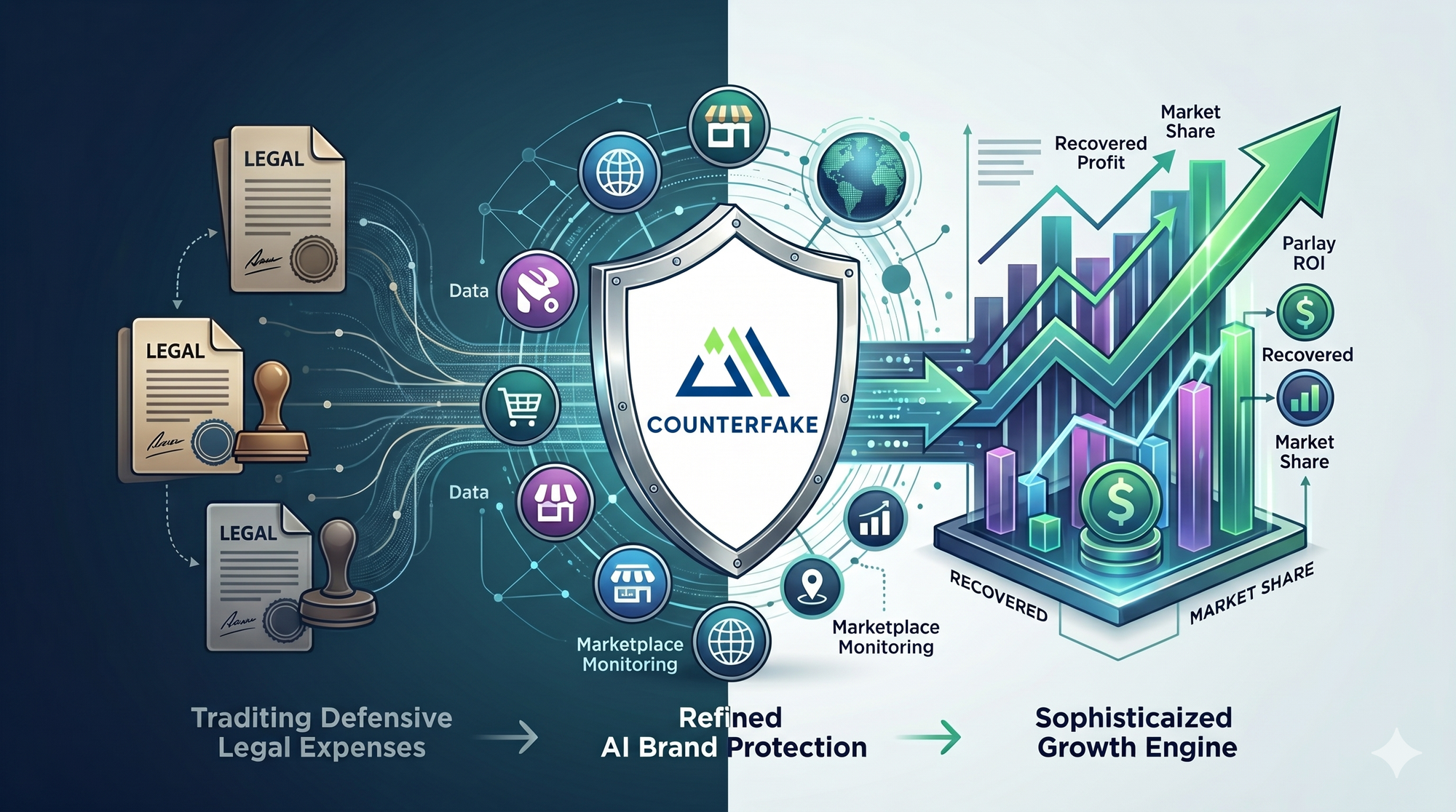
In the fiscal landscape of 2026, the traditional view of brand safety as a "legal expense" has become a liability. Modern enterprises are now shifting their perspective, recognizing that the ROI of brand protection is one of the most significant untapped growth drivers in e-commerce. By transitioning from basic enforcement to a proactive strategy of revenue recovery, businesses can directly reclaim stolen market share and protect their margins. This article explores the financial mechanics behind AI brand protection, illustrating how automated counterfeit detection and comprehensive marketplace monitoring act as a profit center. We analyze the direct and indirect financial benefits of securing your digital footprint and why a robust digital risk protection framework is the ultimate investment for long-term brand equity.
Moving Beyond the Cost-Center Myth
For decades, many organizations treated online brand protection as a defensive tax—a necessary but draining cost associated with doing business globally. However, as we analyzed in our previous discussion on "Why Fake Products Are Increasing in 2026: The Strategic Shift in Brand Protection", the sheer scale of illicit trade has made the financial stakes impossible to ignore. In 2026, the question is no longer "How much does it cost to stop a fake?" but "How much revenue are we leaving on the table by allowing them to exist?"
The shift toward revenue recovery is rooted in data. Every time a consumer unknowingly purchases fake products, a legitimate sale is lost, and the potential for a lifetime customer relationship is severed. When you implement a strategy focused on the ROI of brand protection, you are essentially cleaning up your sales funnel. By removing high-traffic counterfeit listings, you are not just "cleaning the web"—you are performing a massive SEO and conversion optimization play that redirects ready-to-buy traffic back to your authorized channels.
Defining the Financial Impact of Brand Integrity
To calculate the true value of your efforts, it is essential to understand the distinction between traditional "takedowns" and strategic financial recovery. While counting the number of links removed is a metric of activity, it is not a metric of success.
Featured Snippet: What is the ROI of Brand Protection?
The ROI of brand protection is the measurable financial gain achieved by reclaiming market share from unauthorized sellers and counterfeiters. It is calculated by comparing the cost of AI brand protection software against the total value of recovered sales, preserved brand equity, and the reduction in customer service costs associated with fake products.
The Multipliers of Revenue Recovery
- Direct Sales Capture: Redirecting customers from an illicit listing to an official storefront.
- Price Integrity Maintenance: Preventing the "race to the bottom" caused by counterfeiters undercutting your MSRP, which often forces authorized retailers to drop their prices.
- Customer Acquisition Cost (CAC) Optimization: Ensuring that your paid ad spend doesn't accidentally drive traffic to counterfeiters who have hijacked your branded keywords.
How AI Brand Protection Accelerates Financial Gains
Traditional, manual methods of counterfeit detection are fundamentally incapable of producing a positive ROI at the scale of 2026 e-commerce. Human legal teams are too slow and too expensive to fight millions of AI-generated listings. As we detailed in "AI Brand Protection: Moving from Reactive Defense to Proactive Revenue Recovery", the transition to automation is what makes brand protection profitable.
AI brand protection systems work 24/7 to identify and neutralize threats before they can reach critical mass. This speed is vital for revenue recovery. A fake listing that stays up for a week can steal thousands of sales; a listing that is removed in minutes steals none. By reducing the "shelf life" of fake products, AI ensures that the vast majority of consumer demand is met by authentic supply.
Quantifying the Value of Marketplace Monitoring
To understand your ROI, you must have perfect visibility into where the leaks are happening. This is where marketplace monitoring comes into play. It provides the data necessary to prove the business case for your protection programs.
5 Steps to Calculate Your Brand Protection ROI
- Estimate Leakage: Use marketplace monitoring to identify the total volume of counterfeit listings and their estimated monthly sales.
- Apply Conversion Capture Rate: Assume a percentage of those diverted customers (typically 20-40%) would have purchased the original product if the fake was unavailable.
- Calculate Lifetime Value (LTV): Factor in the long-term value of a customer who is saved from a bad experience with a fake product and becomes a loyal brand advocate.
- Subtract Operational Costs: Deduct the cost of your digital risk protection platform and team.
- Analyze Margin Protection: Calculate the revenue saved by preventing unauthorized "gray market" sellers from devaluing your wholesale and retail pricing structures.
By following this process, brands often find that their ROI of brand protection exceeds 300-500% within the first year of implementation.
Strategic Counterfake Positioning: Technology as a Growth Multiplier
The reason why traditional solutions often fail to show a clear ROI is that they focus on the "legal" aspect rather than the "commercial" aspect. Counterfake was designed with the CFO in mind as much as the General Counsel.
While counterfeit detection is the engine, the output is purely financial. Counterfake’s platform utilizes high-speed automation to ensure that your brand protection strategy is always ahead of the curve. One of the unique drivers of ROI in our ecosystem is the Social Radar. In 2026, social commerce is the leading source of "sales leakage." By monitoring TikTok, Instagram, and private messaging groups, Counterfake captures the "invisible" infringements that standard marketplace monitoring tools miss.
Furthermore, our system doesn't just flag fake products; it prioritizes them based on their impact on your revenue recovery. Instead of wasting resources on a listing with zero views, the AI focuses on the "super-sellers" who are actively stealing your market share. This strategic prioritization is what ensures that every dollar spent on the platform translates into multiple dollars of recovered revenue.
Indirect ROI: The Hidden Financial Benefits
Beyond the direct recovery of sales, digital risk protection offers several indirect financial advantages that are often overlooked in quarterly reports:
- Reduced Customer Support Burden: Every fake product that breaks results in a customer calling your support line. Reducing fakes directly lowers your overhead.
- Lower Insurance and Legal Risks: Proactive counterfeit detection reduces the risk of liability lawsuits stemming from dangerous fake products (especially in the cosmetics, electronics, or toy sectors).
- Improved Retailer Relationships: Your authorized distributors are more likely to invest in your brand if they know you are protecting them from unfair competition by unauthorized sellers.
As outlined in "Marketplace Monitoring: How AI Redefines Brand Integrity Across Global Channels" having a clean digital ecosystem makes your brand a more attractive partner for the world’s leading retail platforms.
Building the Business Case for 2026 and Beyond
As we move toward the second half of 2026, the complexity of the digital market will continue to escalate. The organizations that treat online brand protection as a core financial strategy will thrive, while those that see it as an optional legal expense will continue to see their margins eroded by a thousand small cuts.
The ROI of brand protection is not just about stopping bad actors; it is about reclaiming the narrative of your brand and the full value of your innovation. When you invest in AI brand protection, you are investing in the certainty that your customers are getting exactly what they paid for—and that your company is getting exactly what it earned.
The Future of Brand Integrity as a Strategic Investment
The transformation of brand protection from a defensive shield into a revenue-generating sword is the most significant shift in e-commerce strategy this decade. By embracing revenue recovery as a primary KPI, brands can justify the investment in advanced digital risk protection technologies.
The data is clear: in an era of AI-driven fraud, the only way to protect your profit is to out-automate the opposition. By leveraging the Counterfake platform, you aren't just protecting your logo; you are securing your revenue, your reputation, and your future growth.
Are you ready to turn your protection strategy into a profit engine? Contact Counterfake to calculate your potential revenue recovery today.
REFERENCES
- OECD - Measuring the Economic Impact of Counterfeiting and Piracy.
- McKinsey & Company - The Business Value of Design and Brand Integrity.
- EUIPO - Intellectual Property Rights and Firm Performance Report.
- Statista - Global E-commerce Loss Due to Online Fraud 2026.
- Industry Insights - The Shift from Legal Enforcement to Revenue Recovery in B2B SaaS.