The Pop Culture Bridge: Turning Viewers into "New" Superfans
Executive Summary
The "Heated Rivalry" series has done for ice hockey what Drive to Survive did for F1: it brought in millions of fans who previously had zero interest in the sport. This "Gateway Fandom" has triggered a dual-front war in the counterfeit market, targeting both the fictional merchandise of the show and authentic-style hockey club gear. As new fans flood the market with high passion but low "authenticity knowledge," counterfeiters are capitalizing on the chaos.
--
In 2026, the line between sports and entertainment has officially vanished. The chemistry between Shane Hollander and Ilya Rozanov hasn't just captivated romance readers; it has sparked a global surge in ice hockey interest.
History shows that when pop culture adopts a niche sport—think The Queen’s Gambit for chess or Ted Lasso for soccer—the market doesn't just grow; it undergoes a "Demographic Shift."
- The New Persona: New fans of Heated Rivalry are often younger, more tech-savvy, and heavily influenced by social media "aesthetic" trends.
- The Knowledge Gap: Unlike "legacy" hockey fans who can spot a fake jersey from a mile away, these new fans are buying for the vibe. They want the "Montreal Voyageurs" look or the "Hollander #17" jersey, and they want it fast.
The Dual-Front Counterfeit War
The "Heated Rivalry Effect" creates two distinct targets for counterfeiters:
1. The Fictional "Team" Merch
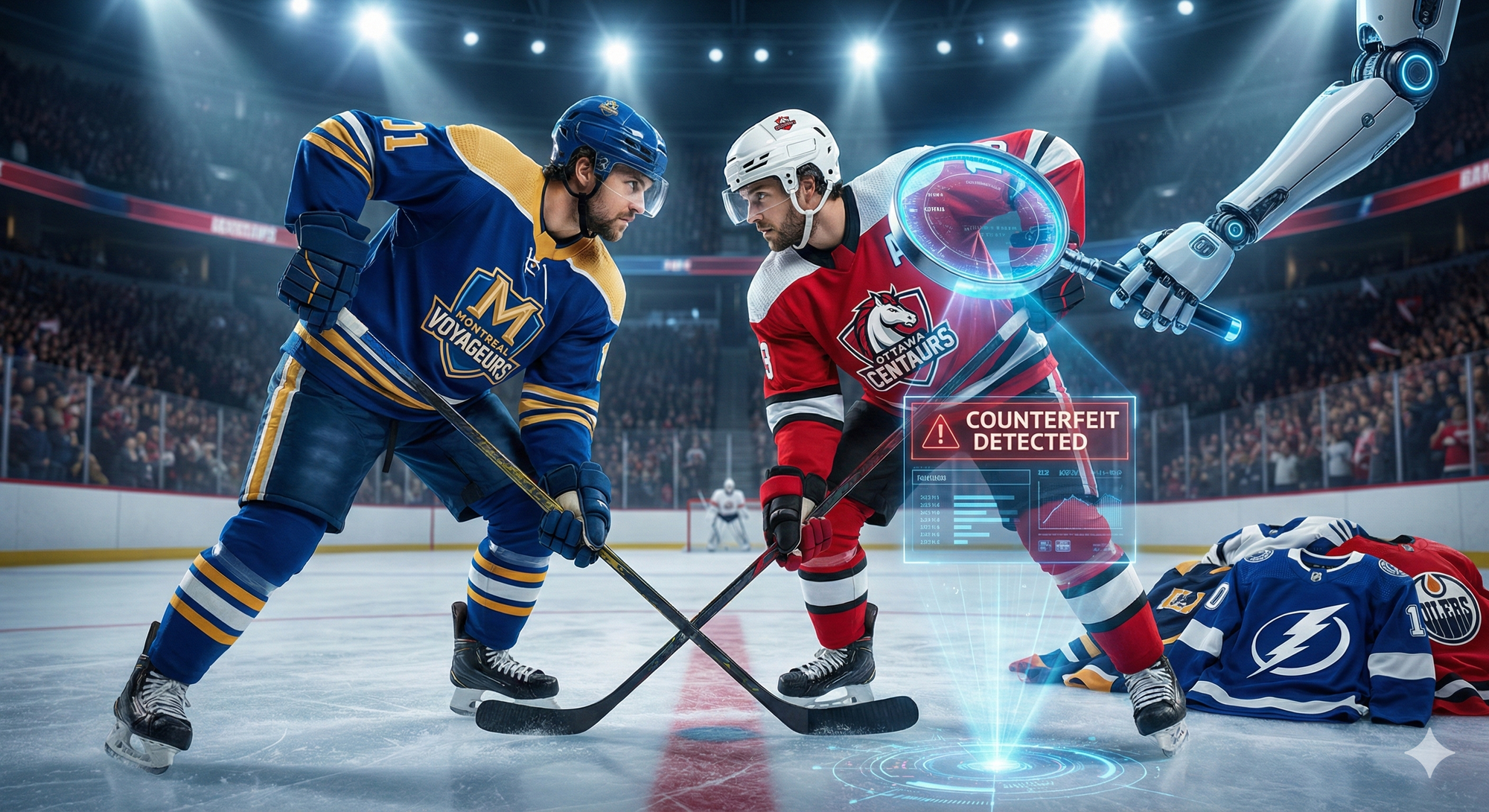
Since the teams in the series (like the Montreal Voyageurs or Ottawa Centaurs) are fictional, official merch stores often struggle to scale production at the speed of a viral trend. Counterfeiters fill this void by:
- Pre-emptive Manufacturing: Producing unauthorized hoodies and jerseys before the official store even launches.
- Niche Apparel: Creating "inside joke" merch—like specific quotes or symbols from the Shane/Ilya storyline—that brands might not have even considered licensing yet.
2. The Real-World Sports Spillover
The series acts as a "gateway drug" to real-world hockey. Fans who start with the show often end up buying real NHL or professional club jerseys.
- The Aesthetic Purchase: These fans aren't necessarily looking for "official team gear"; they are looking for "hockey-core" style.
- Market Dilution: Because these buyers aren't familiar with official holograms, stitching patterns, or fabric weight, they are 70% more likely to fall for high-quality "Superfakes" sold through Instagram or TikTok ads.
Market Analysis: Why "Popularity" is a Counterfeiter’s Best Metric
When a show like Heated Rivalry trends, counterfeiters use AI-driven social listening tools to monitor "Search Intent." If they see a 500% spike in #Hollanov or #HockeyRomance, they shift their production lines in real-time.
- Social Commerce Exploitation: The "link in bio" culture is the primary weapon. Fans see a high-production-value video of someone wearing a "perfect" Shane Hollander jersey and click the link without checking the domain’s legitimacy.
- The "Dupe" Mindset: In 2026, "Dupe Culture" has made buying fakes socially acceptable. New fans often view a counterfeit jersey not as a theft of IP, but as an affordable way to participate in a viral moment.
Defending the Rink: The AI Strategy for 2026
To protect the integrity of both the series and the sports clubs, the defense must be as fast as the fans.
- Automated Fandom Monitoring: Brands must monitor not just their own names, but the fictional names, character names, and trending ship-names associated with the series.
- Cross-Category Protection: Counterfeiters often hide sports merch in "Lifestyle" or "Movie Memorabilia" categories to bypass standard brand filters. AI-powered protection, like Counterfake, identifies these "category traps" by analyzing the image and context, not just the tags.
The Final Whistle: Authenticity in the Age of Hype
The success of Heated Rivalry is a masterclass in market expansion. It has taken a specialized sport and made it a global lifestyle. However, this growth comes with the responsibility of protecting these new, vulnerable fans.
As pop culture continues to drive sports consumption, the goal isn't just to stop the fakes—it’s to ensure that the emotional connection fans have with Shane, Ilya, and a low-quality, fraudulent experience doesn't tarnish the game itself. In 2026, brand protection is the silent coach ensuring the game stays fair for everyone.
References:
- Variety – The 'Heated Rivalry' Phenomenon: Streaming's Impact on Global Hockey Interest.
- EUIPO – 2025/2026 Report on Counterfeit Trends in Licensed Entertainment Merch.
- Global Sports Marketing Journal – The 'Netflix Effect' on Minority Sport Demographics.
- Counterfake AI – Internal Analysis: Fictional vs. Real-World IP Infringement Cycles.